

Introduction
Credit scoring plays a pivotal role in modern life. Financial institutions use credit scores to assess the credit risk of individuals and businesses, which informs decisions on loan approval, credit limits, and interest rates. Beyond loan applications, credit scores are widely employed in areas such as job background checks, insurance rate setting and evaluating business partnerships. Effective credit scoring not only enhances allocative efficiency but also mitigates the risk level of financial institutions. Traditionally, credit scoring relied heavily on financial history and credit reports. However, this approach is evolving, with artificial intelligence (AI) improving credit assessments and playing an increasingly important role in lending decisions through the integration of non-traditional data sources.
Credit score serves as a key index to assess an agent’s ability to repay loans. Traditional credit scoring methods depend largely on fixed rules and infrequent data, often failing to account for real-time indicators or complex financial behaviors, making them less suited to capturing the true creditworthiness in such a dynamic environment. As customer behaviors, macroeconomic and microeconomic conditions, and regulatory environments continue to evolve, the demand from credit decision-makers for more accurate and efficient credit scoring has grown increasingly strong.
Advancements in AI have made it possible to integrate, analyze, and interpret data from multiple sources. Credit rating agencies can now utilize both traditional and non-traditional data sources. Properly trained machine learning models on such datasets can identify factors related to a borrower’s repayment ability, thereby creating a more detailed credit profile. In other words, by integrating and analyzing a wider range of non-traditional data, AI-based credit scoring can improve the accuracy of predicting borrowers‘ capacity, providing lenders with a more comprehensive understanding of each borrower’s financial behavior.
What Are Non-Traditional Data Sources?
In the field of credit scoring, traditional data sources typically include widely used data types such as bank account transaction records, tax records, proof of income, credit histories, and repayment records. In contrast, non-traditional data sources are more diverse, encompassing all data that falls outside the conventional credit scoring system but holds potential value in credit assessment. For individuals, their digital footprints—such as spending history, social media activity, online shopping behavior, and browsing history—are considered non-traditional data sources. For businesses, non-traditional data can include media coverage, website traffic, or even utilities consumption at office locations.
Incorporating non-traditional data sources alongside traditional ones can enhance the accuracy of credit scoring. Tobias Berg (2020) and colleagues analyzed the informational content of digital footprints, i.e., data left behind when users visit or register on websites, and found that such information can reflect a subject’s credit level. When digital footprints are integrated into loan decision-making, default rates significantly decrease.
AI-based Personal Credit Scoring Using Non-Traditional Data Sources
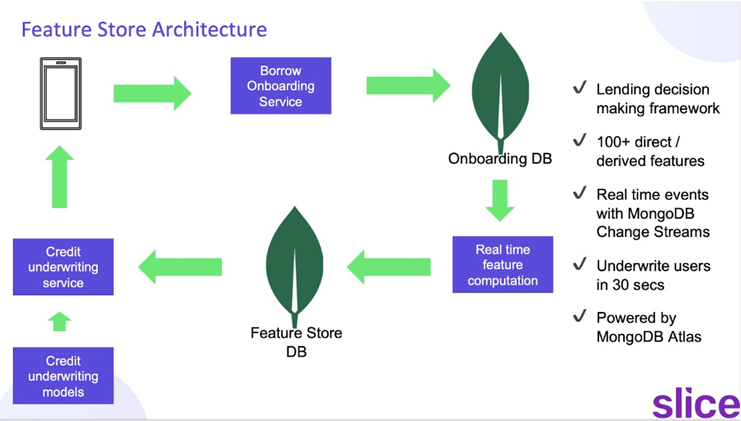
When only traditional data sources are used, individuals without established credit histories—such as those without bank accounts—may be excluded from credit scoring systems. AI-based credit scoring, however, can go beyond traditional credit information by reconstructing an individual’s financial behavior, thus providing a credit score and assisting financial institutions in making decisions using non-traditional data sources. For example, many individuals in India struggle to obtain credit due to a lack of credit data. Slice, an Indian fintech company, uses machine learning to process over 100 direct and indirect variables derived from user-submitted personal information and other known databases, enabling efficient, real-time credit decisions and expanding access to credit.
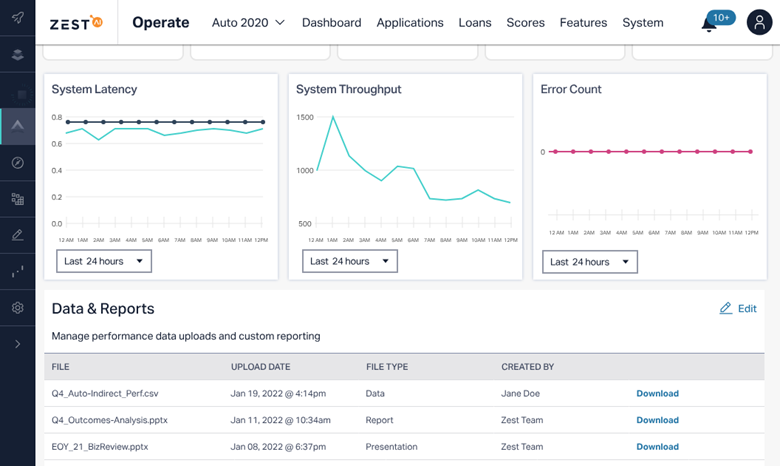
Zest AI, a U.S.-based company, also employs machine learning and big data analytics to improve credit scoring models. The models developed by Zest AI are used by several banks and credit unions. For instance, Coastal Credit Union sought to acquire more high-quality borrowers without increasing risk. Zest AI achieved this by developing a loan model that incorporates over 10 times the number of credit variables typically used, thereby expanding access to credit for more individuals. According to Zest AI, clients using their products generally experience a 20% to 30% increase in loan approval rates while maintaining the same level of risk.
AI-based Business Credit Scoring Using Non-Traditional Data Sources
Just as with AI-based personal credit scoring, AI-based business credit scoring also seeks to analyze the digital footprints left by companies in their daily operations. Recognizing the challenges small and medium-sized enterprises (SMEs) face in obtaining financing, Worth AI offers an AI-driven platform designed to provide businesses with comprehensive credit scores. The platform extracts data from thousands of traditional and non-traditional sources to generate a standardized score, Worth ScoreTM, which enables lenders and SMEs alike to evaluate a company’s financial status and loan repayment capacity, thereby reducing friction in the financing process.
Challenges and Future Prospects
AI has brought revolutionary changes to credit scoring through the integration of multiple non-traditional data sources. According to McKinsey, AI positively impacts credit approval times and approval rates, helping to scale operations while reducing costs. By integrating and analyzing vast amounts of data from various sources, AI enables more comprehensive credit risk assessments; advanced machine learning algorithms enhance processing speed, reduce operational costs, and mitigate human biases and errors. This not only provides new financial service opportunities for SMEs and individuals with limited credit histories but also drives the growth of fintech.
However, these advancements come with challenges. The use of non-traditional data sources may raise data privacy and security concerns, such as ensuring that data obtained from online sources does not infringe on user privacy. Additionally, the quality and completeness of non-traditional data may be inferior to that of traditional sources, and biases in training data may lead to potential discrimination. Furthermore, the “black box” nature of AI algorithms can result in a lack of transparency and explainability in the credit scoring process, making it crucial to improve the transparency of the technology and algorithms. Nonetheless, as technology advances and regulations improve, the application of AI in credit scoring is expected to become increasingly widespread, leading to more accurate and fair credit assessments in the future.
References
[1] Berg, T., Burg, V., Gombović, A., & Puri, M. (2020). On the rise of fintechs: Credit scoring using digital footprints. The Review of Financial Studies, 33(7), 2845-2897.
[4] https://www.zest.ai/resources/using-ai-to-spot-more-good-borrowers-with-coastal-credit-union
- Source: https://www.mongodb.com/blog/post/how-slice-enables-credit-approval-less-than-minute-millions-indians ↩︎
- Source: https://www.zest.ai ↩︎
The work described in this article was supported by InnoHK initiative, The Government of the HKSAR, and Laboratory for AI-Powered Financial Technologies (AIFT).
(AIFT strives but cannot guarantee the accuracy and reliability of the content, and will not be responsible for any loss or damage caused by any inaccuracy or omission.)